TransOurDream Upgraded Iron on Heat Transfer Paper for T Shirts (8.5×11'', 15 Sheets)
HTVRONT Auto Heat Press Machine for T Shirts
Best T Shirt Printing Buying Guide — Black Friday Deals 2026
T-shirt printing can mean ordering a personalized garment or assembling a do-it-yourself transfer workflow. These listings serve different points in that process: one offers a custom shirt with personalized image or text, one supplies inkjet transfer paper, and one is a heat press. Start by deciding which part of the project you want handled and which part you want to manage yourself. During Black Friday, treat seasonal messaging as a prompt to compare the exact item and its stated details, not as evidence of a particular promotion. The right choice depends on the project, your existing equipment and how much of the printing process you want to take on.
Custom T-Shirt
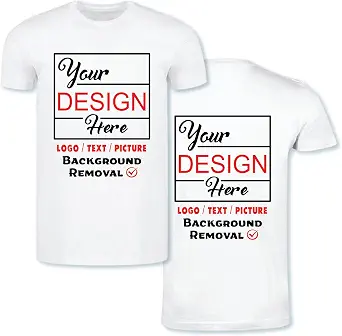
If your priority is a shirt personalized for a particular purpose, this custom-shirt option is the most direct route among these listings. It accepts a personalized image or text and uses digital printing; the stated audience is unisex adults. The listed occasions include a company, a wedding and greetings, so the customization can be considered for a group, event or message-led gift. Its Best Overall label is an editorial fit for shoppers who want the listing to connect personalization with a wearable product, rather than sourcing transfer materials and managing application themselves. That label is a guide to the role it fills here, not a claim of tested superiority.
Think through the artwork and wording before choosing this route. A company may want a recognizable mark or a short message, while a wedding or greeting may call for a design tied to the occasion. Those are possible directions suggested by the stated uses, not guarantees about available design layouts or options. The listing establishes that image and text can be personalized, but the supplied details do not specify image preparation rules, garment fabric, color choices, fit options, printing-area dimensions or care instructions. Check the exact listing for the options and requirements relevant to your design before placing an order.
This can suit someone who wants to decide what appears on a shirt without taking on the transfer-paper and heat-press steps described by the other products. That convenience is about the listed product type; it does not establish how quickly an order arrives or how a particular design will look. For Black Friday, compare the exact custom-shirt listing and selected configuration with what you need for the occasion. Confirm that the personalization method covers your intended image or wording and that the audience and use make sense for the wearer. If you want control of the application process or already plan to print transfers yourself, the paper or press may better match that part of your workflow.
Key specs
| Customization | Personalized Image/Text |
| Occasions | Your Company/Wedding/Greetings |
| Printing | Digital Printing |
| Audience | Unisex Adult |
TransOurDream Upgraded Iron on Heat Transfer Paper for T Shirts (8.5×11'', 15 Sheets)
Check Price on Amazon
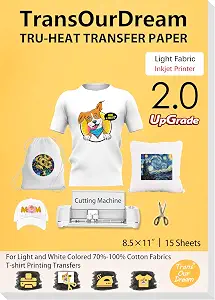
For a shopper building a transfer workflow around an inkjet printer, this paper is the supply-focused choice. The pack contains 15 sheets of light transfer paper in 8.5 x 11 inches, along with 3 sheets of reusable Teflon Paper. The stated printer compatibility is inkjet printers, including examples such as HP and Brother, using pigment ink or dye ink; sublimation ink is explicitly excluded. The transfer process is with an iron or heat press. Its Best Budget label reflects its role as the paper option in this selection, not a verified claim that it has the lowest price or the best performance.
The key decision is whether your existing printer and ink match the stated requirements. Check the ink type rather than relying only on a printer brand name: the listing names pigment and dye ink as compatible and says not to use sublimation ink. If you are uncertain which ink your printer uses, resolve that before buying. Also consider whether the supplied paper size and included sheet count suit the project you have in mind. The facts identify the paper as light transfer paper, but do not establish which garment colors, fabrics or design dimensions will work for a particular project. Verify the exact listing’s directions and the needs of your intended shirt.
This option puts more of the process in your hands than ordering a personalized shirt: you supply the printer, create or prepare the design, and apply the transfer with an iron or heat press. The provided details do not specify application settings, so consult the product instructions rather than guessing at a process. During Black Friday, compare the listing’s exact pack and compatibility details with the equipment you already own. The reusable Teflon Paper is part of the stated contents, but its presence does not answer every question about setup or application. Choose this paper when its printer-and-ink requirements, format and transfer method align with your own plan; choose another route if you want a personalized shirt without managing those steps.
Key specs
| Paper size | Paper Size 8.5 x 11 inches |
| Included sheets | Pack of 15 sheets Light transfer paper and 3 sheets Reusable Teflon Paper. |
| Printer and ink compatibility | Inkjet Printers (such as HP, Brother and other brands)–Pigment Ink or Dye Ink (Do NOT use Sublimation ink) |
| Transfer process | Transfer with Iron or Heat Press. |
HTVRONT Auto Heat Press Machine for T Shirts
Check Price on Amazon
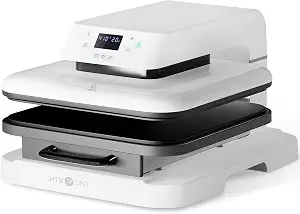
This heat press is the equipment choice for someone planning to apply transfers with a press rather than relying only on an iron. Its press size is 15×15, and it auto-adjusts to a project’s thickness up to 1". The listed operating modes are 4 fast modes, 2 custom modes and an auto mode; it also automatically shuts off if unused after 15 minutes. Its dimensions are 20"L x 12"W x 16"H. The Best for heat-press projects label follows directly from its stated role and pressing features; it is not a claim that it outperforms other equipment.
Consider whether a press belongs in your workflow before comparing modes. If you plan to use transfer paper, this machine provides a press-based application route, while the paper listing also permits transfer with an iron. The listed automatic adjustment applies to project thickness up to 1", so compare that limit with the projects you expect to press rather than assuming every item is suitable. The mode choices provide different stated ways to operate the press, but the supplied facts do not explain individual settings or establish which mode suits a particular transfer. Follow the product instructions for setup and application.
Space is another practical part of the decision. Use the exact dimensions to judge where the press could sit and how it would fit into the work area; do not treat its press size as a substitute for the machine’s overall dimensions. The auto-off detail may matter when considering your routine, but it should not replace careful operation or the manufacturer’s guidance. During Black Friday, check the exact machine listing and the project requirements before deciding that a press is the missing part of your setup. This is an equipment purchase, not a complete printing kit on the facts provided: you still need to determine what materials and design process your intended work calls for.
Key specs
| Press size | 15×15 |
| Thickness capacity | auto-adjusts to your project's thickness up to 1" |
| Operating modes | 4 fast modes, 2 custom modes and an auto mode |
| Auto-off | automatically shut up if you don’t use it after 15 minutes |
| Dimensions | 20"L x 12"W x 16"H |
Choose the workflow before the artwork
The most useful first decision is who will handle the transformation from idea to shirt. With the custom-shirt listing, you provide personalized image or text for a digitally printed shirt. With transfer paper, you take responsibility for printing the design on compatible inkjet equipment and applying it with an iron or heat press. The press is a separate piece of equipment for the application stage. These are not interchangeable products, even though each can belong to a t-shirt-printing project. A clear workflow prevents you from buying a supply when you really want a completed personalized garment, or buying equipment before confirming that you want to manage transfers.
Write down what you already have and what you want to do next: select a design, print it, apply it, or simply order a personalized shirt. For example, someone preparing a company or wedding shirt may prefer to focus on the image or message, while a hands-on maker may want to coordinate printing and pressing. Those are different priorities, not evidence that one route is better for everyone. Black Friday browsing can make it tempting to start with a product category or a seasonal banner. Start instead with the task you want to accomplish, then use the listing details to see whether that item fits the task.
Read the offer as a configuration, not a headline
A Black Friday label does not establish that a product is discounted, available in a particular variant or suitable for your project. Compare the exact item and configuration shown in the listing with the facts that matter to you. For the custom shirt, check that the personalization and occasion fit your intended use. For the paper, verify sheet format, included materials and printer-and-ink compatibility. For the press, review its press size, thickness capacity, modes and dimensions. Keeping the comparison tied to stated details helps separate useful information from seasonal framing.
Before deciding, identify any project requirement the supplied facts do not settle. Examples include the garment’s fabric or color, artwork preparation, application instructions, and the exact configuration offered for a custom shirt. Do not assume those details from a product category or from another item in the workflow. Look for them in the exact listing and product directions. If an important requirement remains unclear, pause rather than treating an appealing Black Friday presentation as confirmation. This approach is especially useful when one purchase depends on another: compatible paper cannot be established by the press alone, and a press does not establish which transfer material your project needs.
Treat ink compatibility as a decision gate
The transfer paper has a clear compatibility boundary: it is specified for inkjet printers using pigment ink or dye ink, and the listing says not to use sublimation ink. That is more useful than choosing by printer brand alone. HP and Brother appear as examples of brands, but the ink requirement still matters. Check the ink your particular printer uses before purchasing, and do not treat a familiar brand name as a substitute for confirming the stated ink type. If the ink identity is uncertain, resolve that question before planning a transfer around this paper.
The paper facts also give you a concrete format and pack to compare: 8.5 x 11 inches, with 15 sheets of light transfer paper and 3 sheets of reusable Teflon Paper. Consider whether those stated contents suit the scale and quantity of work you intend to do, without assuming a design size or application result that is not specified. The listing allows application with an iron or heat press. Black Friday may be a useful time to review supplies, but the seasonal context cannot override an ink mismatch. Make compatibility the first filter, then assess the paper format and application route.
Plan the application around the space and task
If pressing is part of your plan, evaluate the machine against both the project and the place where you would use it. The press is 15×15, auto-adjusts to project thickness up to 1", and measures 20"L x 12"W x 16"H. Use those specifications as written when considering your work surface and the kind of item you intend to press. They describe different aspects of the machine, so the press size should not be mistaken for its overall dimensions. If a project’s thickness is outside the stated capacity, the provided facts do not establish whether the machine is appropriate for it.
The listed 4 fast modes, 2 custom modes and an auto mode tell you that several operating modes are available, but they do not tell you which setting to use for a particular transfer. Consult the instructions for the material and task rather than inferring a setting from a mode name. The automatic shutoff after 15 minutes of nonuse is a relevant listed behavior, not a reason to leave equipment unattended. During Black Friday, compare the press against a real plan for using it, including the work area and the materials you intend to apply. If an iron already suits your intended transfer process, the paper listing identifies that as an alternative application method.
Make the design fit its wearer and occasion
Personalization starts with the message or image, but the intended wearer and occasion shape what is worth ordering. The custom-shirt listing supports personalized image or text, names a unisex adult audience, and lists a company, wedding and greetings among its occasions. Those facts can help you decide whether to explore it for a group or a personal message. They do not specify available garment choices, sizing details, layout controls or design restrictions. Check the exact listing for those particulars before committing artwork, especially if the shirt must meet a specific need.
For a do-it-yourself transfer, the design also has to fit the supplies and application process you select. The paper’s stated format is one practical fact, while the listing does not provide enough here to infer an allowable design area or the result on a chosen garment. Confirm those details in the product directions and make sure your printer’s ink meets the stated compatibility. Black Friday is a sensible occasion to review the whole plan rather than selecting an item because it belongs to a printing category. A clear brief—who will wear the shirt, what it should communicate and which steps you will manage—helps keep a custom order, paper purchase or press purchase tied to an actual purpose.
Make your Black Friday choice
The strongest choice is the one that fits the stage of t-shirt printing you actually want to handle. Pick the personalized digital-printing shirt if the priority is image or text customization for an occasion; consider the transfer paper when your inkjet printer and ink meet its stated requirements; choose the press when a heat-press project and its space needs are part of your plan. During Black Friday, verify the exact listing, configuration and project details rather than assuming a seasonal label settles the decision. Compatibility and workflow come first; then choose the item that fills the role you need.