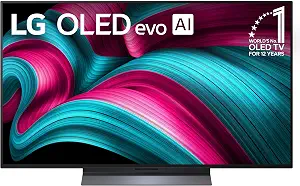
LG 42-Inch Class OLED evo AI 4K C5 Series Smart TV w/Dolby Atmos, Dolby Vision, HDR10, AI Super Upscaling 4K, Filmmaker Mode, Wow Orchestra, Alexa Built-in (OLED42C5PUA, 2025)
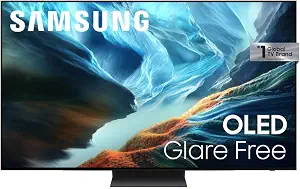
Samsung 65-Inch Class S90H Series, OLED, 4K, Smart TV, 2026 Model
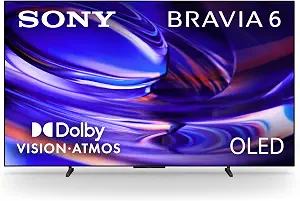
Sony 65 Inch BRAVIA 6 OLED 4K HDR Smart Google TV with Gemini (K-65A60)
Best Oled Tv Buying Guide — Black Friday Deals 2026
Choosing an OLED TV for Black Friday starts with the television you actually want, not a seasonal banner. These options point to different priorities: a smaller LG with a broad set of named picture and sound features, a 65-inch Samsung with a listed 165-hertz refresh rate, and a 65-inch Sony that names Dolby Vision support. Think about the room, the content you watch, and the connections or smart-TV environment you prefer. Then compare the exact model and size shown in any Black Friday offer. The recommendations below are editorial choices among these three televisions, not claims that one is best for every household.
LG 42-Inch Class OLED evo AI 4K C5 Series Smart TV w/Dolby Atmos, Dolby Vision, HDR10, AI Super Upscaling 4K, Filmmaker Mode, Wow Orchestra, Alexa Built-in (OLED42C5PUA, 2025)
Check Price on Amazon
Best Overall is the editorial pick for the LG 42-Inch Class OLED evo AI 4K C5 Series because its listed features make it a flexible starting point across several kinds of viewing. The 42-inch OLED screen and 4K resolution give shoppers a defined compact-size option, while its 120-hertz refresh rate is relevant if smooth motion is one of your priorities. Consider it when a large television would be awkward for your intended space, or when you want to compare a smaller screen with the two 65-inch choices. Black Friday shoppers should still verify that the offer names this exact size and model.
The feature set also gives this LG a distinct appeal for people who want named picture and audio options in one television. Dolby Vision, HDR10, AI Super Upscaling 4K, and Filmmaker Mode are listed, along with Dolby Atmos and Wow Orchestra. Those names can help you make a content and feature checklist, but they do not establish how a particular program will look or sound in your room. Alexa is built in, so the listing may suit shoppers who specifically want that named assistant feature. Check that these are the features you value rather than letting a long list substitute for a decision about viewing habits.
Its listed four HDMI ports and three USB ports give connection planning a concrete starting point. Think through which devices you expect to connect and whether the port count suits that setup; the available facts do not describe port placement or individual port capabilities. The 0.1-millisecond response-time specification is another item to weigh if it matters to your shortlist, without treating one figure as a complete picture of everyday performance. Among these picks, this LG is the choice labeled Best Overall, not a universal winner. For Black Friday, compare the exact OLED42C5PUA listing and included model details rather than assuming a deal for another C5 size is interchangeable.
Key specs
| Screen size | 42 inches |
| Display type | OLED |
| Resolution | 3840 x 2160 |
| Refresh rate | 120 hertz |
| Response time | 0.1 milliseconds |
| HDMI ports | 4 |
| USB ports | 3 |
Samsung 65-Inch Class S90H Series, OLED, 4K, Smart TV, 2026 Model
Check Price on Amazon
The Samsung 65-Inch Class S90H Series is labeled Best for a higher listed refresh rate because its stated 165-hertz figure distinguishes it from the other refresh-rate figures in this group. That makes it worth considering if refresh rate is high on your personal checklist, while the 65-inch screen and 4K resolution establish a larger-screen option for your room. These details do not make the television the right choice for everyone: a shopper who prioritizes another screen size or a particular named format may prefer to focus elsewhere. During Black Friday, confirm that the offer identifies the S90H and the intended 65-inch version.
The listing identifies the display as OLED and the operating system as Tizen. That gives you two useful points for narrowing a shortlist: the display category and the named smart-TV system. If the software environment is part of your decision, consider whether Tizen is the system you want to evaluate; the available product details do not describe particular apps or services. Likewise, the refresh-rate figure is a specification to compare, not a promise about how every type of content will appear. Start with what you watch or play and decide whether that figure meaningfully affects your choice.
Four HDMI ports are listed, which can help you check the Samsung against the devices you plan to connect. The facts here do not say how those ports are arranged or specify their individual capabilities, so use the exact listing for any further connection questions. Its Black Friday label should not distract from matching the model and configuration: a similar-looking Samsung offer is not automatically the same S90H. This recommendation is deliberately narrow—Best for a higher listed refresh rate—and does not claim measured superiority or a better overall experience. Choose it when that stated refresh-rate detail and its screen size align with your priorities.
Key specs
| Display | Display Technology OLED |
| Resolution | Resolution 4K |
| Refresh rate | Refresh Rate 165 hertz |
| Screen size | Screen Size 65 inches |
| HDMI ports | Total Number of HDMI Ports 4 |
| Operating system | System Operating System Tizen |
Sony 65 Inch BRAVIA 6 OLED 4K HDR Smart Google TV with Gemini (K-65A60)
Check Price on Amazon
The Sony 65 Inch BRAVIA 6 OLED is labeled Best for Dolby Vision format support. Its listed HDR formats are Dolby Vision, HDR10, and HLG, giving format-conscious shoppers a clear reason to consider it. The television is also identified as OLED with 4K resolution, and its 120-hertz refresh rate may matter if that specification is part of your comparison. These details are useful for narrowing candidates, but they do not establish which programs or services you use will provide a particular format. Before Black Friday, make a short list of the content and features you actually want to match.
This Sony is a 65-inch option, the same stated screen size as the Samsung in this guide. That makes it practical to compare their distinct listed priorities rather than treating size alone as the deciding factor: the Sony names Dolby Vision, HDR10, and HLG, while the Samsung is the option with the higher listed refresh-rate figure. The Sony listing also names Google TV with Gemini. Consider that information if the named smart-TV platform is relevant to your household, without assuming any unlisted app, service, or capability.
Four HDMI ports are specified, and the VESA mount standard is listed as 400 x 200 mm. Those details are useful when planning connections and checking an installation, but confirm your equipment and mounting requirements against the exact listing rather than assuming fit. The recommendation is Best for Dolby Vision format support because that format is explicitly named among the supported HDR formats; it is not a claim that this set is the best choice for every viewer. For Black Friday, compare the exact K-65A60 model and its stated configuration with the offer in front of you.
Key specs
| Display | Display Technology OLED |
| Resolution | Resolution 4K |
| Refresh rate | Refresh Rate 120 hertz |
| HDR formats | HDR Format Supported Dolby Vision, HDR10, HLG |
| HDMI ports | Total Number of HDMI Ports 4 |
| VESA mount | VESA Mount Standard 400 x 200 mm |
Let the viewing setting narrow the field
The most obvious distinction among these choices is their stated screen size. The LG is 42 inches, while the Samsung and Sony are each 65 inches. Begin with where you intend to place the television and how you expect to watch: a smaller screen may make more sense for a compact setup, while a larger one may better suit a room where you want a broad viewing area. Those are planning considerations, not guarantees about how a screen will feel in a particular space. If possible, picture the actual location before responding to a Black Friday offer.
Next, decide whether the two larger options are interchangeable for your needs. Both are listed as 4K OLED televisions, but their other named specifications differ. The Samsung lists a 165-hertz refresh rate; the Sony lists 120 hertz and identifies several HDR formats. The LG offers a different size alongside its own named features. Avoid choosing by diagonal measurement alone: consider your room, viewing distance, furniture, and the role the television will play. No viewing-distance or room-size rule is supplied here, so use your own space and preferences rather than relying on an unsupported universal threshold.
Black Friday search results can place different sizes or model names close together. Read the product identity and configuration before comparing offers, especially if you already decided that the LG’s compact size or one of the 65-inch screens suits your space. A favorable-looking listing is only relevant if it is for the television you selected.
Decide whether refresh rate belongs at the top
Refresh rate is a useful comparison point when it connects to what you watch or play, but it should not be the only filter. The listed figures are 120 hertz for the LG, 165 hertz for the Samsung, and 120 hertz for the Sony. The Samsung is therefore the pick labeled Best for a higher listed refresh rate. That description stays close to the provided specification; it does not establish that every viewer will notice a difference or that one television performs better in all situations.
Ask what kind of motion matters in your routine. If you often weigh motion-related specifications while comparing televisions, the figure may help organize your shortlist. If it is not a priority, spend more attention on the screen size, named picture formats, smart-TV system, or connections that matter to you. A number on a listing cannot tell you how a specific program is produced or what your viewing conditions will be like, so avoid turning the specification into a blanket promise.
Resolution provides a separate clue. All three televisions are listed as 4K, with the LG’s resolution written as 3840 x 2160. Keep resolution and refresh rate as separate considerations instead of assuming that one answers the other. During Black Friday, first select the model you want, then check that the refresh and resolution details shown belong to that exact model and size. This avoids comparing a headline for one configuration with specifications from another.
Use named picture formats as a content filter
If HDR-format support matters to you, the Sony gives you an explicit set of names to compare: Dolby Vision, HDR10, and HLG. The LG’s product name and listed features include Dolby Vision and HDR10. Those details make the two listings useful starting points for a format-focused shortlist. The Samsung facts provided here identify OLED and 4K but do not list HDR formats, so do not infer either support or lack of support from that omission. Check the exact product information for any format that is essential to your decision.
A format name is most useful when you connect it to your own content priorities. Think about the kinds of programs you watch and whether a particular supported format is a requirement, a preference, or simply a detail you are curious about. The provided facts do not identify what content you watch or what a service supplies, so the television specification alone cannot settle that question. For Black Friday, compare the named formats in the exact model listing rather than assuming nearby listings share the same feature set.
The LG also names Filmmaker Mode and AI Super Upscaling 4K, while the product name lists Dolby Atmos and Wow Orchestra. Treat these as specific features to investigate if their names match something you want. They are not a reason to overlook size, connections, or the rest of your priorities. Make a short must-have list first; then use named features to distinguish models that already fit your basic requirements.
Plan the devices and installation before checkout
Count the devices you expect to connect and compare that plan with the listed port totals. The LG specifies four HDMI ports and three USB ports; the Samsung and Sony each list four HDMI ports. The facts do not state port placement or each port’s capabilities, so a total is only a first check. If a particular device or connection requirement is essential, confirm the relevant details for the exact model instead of assuming that all ports are equivalent.
Installation deserves its own check. The Sony lists a VESA mount standard of 400 x 200 mm, which gives shoppers a concrete mounting detail to verify against their intended setup. No mount standard is provided here for the other two televisions, so the missing detail should prompt a lookup rather than an assumption about whether a particular mount will work. Measure or check your planned arrangement independently; the listed television dimensions beyond screen size are not included in these facts.
Also consider which smart-TV system or named assistant feature fits your preferences. The Samsung lists Tizen, the Sony names Google TV with Gemini, and the LG name includes Alexa built-in. These details help you identify what to examine, but do not establish a particular app catalog or how a service will work. Before a Black Friday purchase, verify the model identity and any setup requirement that matters to you.
Compare the offer with your chosen configuration
A Black Friday message is not enough to tell you whether a listing matches your shortlist. Check the full model name and size: the compact LG is OLED42C5PUA, the Samsung is the 65-inch S90H Series, and the Sony is K-65A60. Match the details on the offer page to the intended television, particularly when search results place products from the same brand or series together. Do not assume that a different size or similarly named model has the same listed configuration.
Then revisit your reasons for choosing it. For the LG, that may be its size and its named picture, audio, and assistant features. For the Samsung, it may be the stated refresh rate and Tizen. For the Sony, it may be its named HDR formats or mounting specification. A deal only helps with your decision when the exact product aligns with those priorities. This guide provides no sale prices or discount information, so compare the offer details you can verify rather than treating the seasonal label as evidence of a particular saving.
Read the configuration information carefully before proceeding, and check any detail not covered by the facts here directly on the listing. Black Friday can make it tempting to decide quickly, but pausing to confirm the model, size, and features can prevent a mismatch. Keep the recommendation labels in perspective: they distinguish these three choices by stated characteristics, not by a test or a market-wide ranking.
Make your Black Friday choice
A good shortlist begins with the mismatch you most want to avoid: an unsuitable screen size, an unimportant headline specification, a format that does not meet your priorities, or an unverified connection or mounting detail. The LG offers the smaller listed size and a broad set of named features; the Samsung is the higher-refresh-rate choice; and the Sony explicitly lists Dolby Vision alongside HDR10 and HLG. Use those differences to focus your search, then verify the exact model and configuration in any Black Friday offer. The best fit is the television whose stated details match your room and routine.