NETGEAR Nighthawk WiFi 6 Router R6700AX
NETGEAR Nighthawk WiFi 7 Router RS90
NETGEAR Nighthawk WiFi 7 Router RS300
Best Netgear Router Buying Guide — Black Friday Deals 2026
A useful Netgear router shortlist starts with the limits you can actually verify: the stated Wi-Fi generation, coverage, device capacity and wired ports. The Nighthawk WiFi 6 Router R6700AX, WiFi 7 Router RS90 and WiFi 7 Router RS300 describe different configurations, so a Black Friday listing is worth considering only when its exact model matches your needs. The figures here are planning cues, not promises about performance in every home. Decide which details matter—such as a 2.5 Gig WAN port, tri-band Wi-Fi or guided app setup—then compare the exact offer and variant. No promotion is assumed; confirm the product identity and included specifications before you buy.
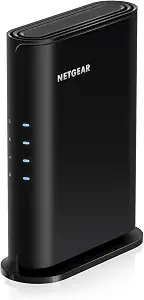
NETGEAR Nighthawk WiFi 6 Router R6700AX
Best Budget is the editorial label assigned to the Nighthawk WiFi 6 Router R6700AX within this selection. It identifies the model as the budget-oriented pick here; it does not establish a sale price or guarantee that it costs less during Black Friday. Its stated WiFi 6 speed is up to 1.8 Gbps across 2.4 GHz and 5 GHz bands. NETGEAR lists coverage up to 1,500 sq. ft. and support for up to 20 connected devices. Those limits can help you decide whether its configuration aligns with the rooms and connected equipment you intend to serve.
This model has four 1 Gig Ethernet LAN ports and a separate 1 Gig WAN port that connects to a modem or gateway. The product details say it pairs with your existing modem or gateway via ethernet, making that connection a practical point to verify before choosing it. The free Nighthawk app for iOS or Android provides guided setup, and WPA3 encryption is listed for wireless security. These are concrete details to weigh if you want to compare the physical connection plan, initial setup route and stated security protocol. They do not establish every compatibility or configuration detail for your home.
Use Black Friday to check the exact R6700AX offer against the needs that led you to consider it. Confirm the model name and listed specifications rather than assuming a similar-looking Nighthawk listing has the same configuration. This pick may suit a shopper whose expected connected-device count and coverage needs fit the stated figures, and who can use the separate WAN connection and available LAN ports as described. If your plan centers on WiFi 7 or a 2.5 Gig WAN port, compare the RS90 instead; if you need the RS300’s stated tri-band design or capacity for up to 100 devices, review that model. Do not choose based on the Best Budget badge alone.
Key specs
| Wi-Fi speed | WiFi 6 delivers speeds up to 1.8 Gbps across 2.4 GHz and 5 GHz bands. |
| Coverage | Covers up to 1,500 sq. ft. |
| Connected devices | for up to 20 connected devices. |
| Ethernet LAN ports | Four 1 Gig Ethernet LAN ports |
| WAN port | A separate 1 Gig WAN port connects to your modem or gateway. |
| Setup | Download the free Nighthawk app on iOS or Android for guided setup. |
| Wireless security | WPA3 encryption |
| Modem compatibility | Pairs with your existing modem or gateway via ethernet. |
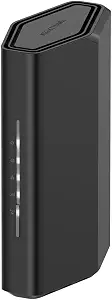
NETGEAR Nighthawk WiFi 7 Router RS90
Best Overall is an editorial label for the Nighthawk WiFi 7 Router RS90 among the routers in this guide, not a claim of measured superiority. Its listed WiFi speed is up to 3.6 Gbps across 2.4 GHz and 5 GHz bands, with coverage up to 2,000 sq. ft. and capacity for up to 50 devices. Those figures make it a plausible shortlist candidate if you want a WiFi 7 model with a stated household-scale coverage and device target. They do not settle how the router will perform in your particular layout, so treat them as a starting point rather than a guarantee.
The connection details may help eliminate a mismatch before checkout. The RS90 has a 2.5 Gig WAN port for the modem connection and four 1 Gig Ethernet LAN ports for wired equipment. If those are the ports you need, compare that configuration with the devices you intend to connect and the specifications of your internet equipment. The listing also calls for the free Nighthawk app on iOS or Android for guided setup. That gives you a stated setup route, but it does not answer every question about your home network or preferred configuration.
For Black Friday, choose the RS90 because its listed combination fits your priorities—not because a seasonal badge implies a better deal. Check that the offer names RS90, then confirm the speed, coverage, device capacity and ports shown for that exact variant. The Best Overall label simply marks a balanced candidate among these three choices. If your priority is a tri-band configuration or capacity for up to 100 devices, the RS300’s listing speaks more directly to those needs; if you need the R6700AX’s stated WPA3 encryption, check that model’s details. The right decision depends on which documented features resolve your own must-haves.
Key specs
| WiFi speed | Up to 3.6 Gbps across 2.4 GHz and 5 GHz bands |
| Coverage | up to 2,000 sq. ft. of coverage |
| Device capacity | for up to 50 devices |
| WAN port | 2.5 Gig WAN port |
| LAN ports | Four 1 Gig Ethernet LAN ports |
| Setup | Download the free Nighthawk app on iOS or Android for guided setup. |
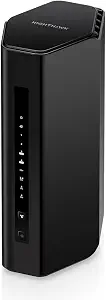
NETGEAR Nighthawk WiFi 7 Router RS300
Check Price on Amazon
Best for many connected devices is the editorial label for the Nighthawk WiFi 7 Router RS300. The product listing specifies capacity for up to 100 devices, making that figure a clear reason to consider it when a household expects many connected devices. It is a Wi-Fi 7, tri-band router with a stated data transfer rate of 9.3 gigabits_per_second and coverage up to 2,500 sq. ft. These specifications define the configuration on paper; they do not promise a particular experience in every room or for every combination of devices.
The wired layout is distinctive in the listed details: two 2.5G ports and two Gigabit ports. Before deciding, write down which equipment you want connected by ethernet and check whether those port types and counts align with your plan. The listing also names MU-MIMO and OFDMA, plus WPA3 as its security protocol. Those are useful items to compare when reviewing specifications, but the facts provided do not establish how much any feature will change your own network experience. Keep the question specific: do these documented details match what you want to prioritize?
For a Black Friday purchase, check that the product page identifies the RS300 and that the offer corresponds to this tri-band configuration. Its Best for many connected devices label rests on the stated capacity, not a test or a promise that every home will need this model. Consider whether you have a reason to prioritize that capacity, the listed coverage or the combination of Ethernet port types. If your shortlist is driven instead by a separate 2.5 Gig WAN port and four 1 Gig LAN ports, the RS90 is documented with that arrangement. If guided app setup or a separate 1 Gig WAN port is central to your checklist, review the R6700AX’s listed details. Match the model to the actual requirements rather than chasing the largest-sounding figure.
Key specs
| Wi-Fi generation | Wi-Fi 7 |
| Frequency bands | Tri-Band |
| Data transfer rate | 9.3 gigabits_per_second |
| Coverage | up to 2,500 sq. ft. |
| Device capacity | up to 100 devices |
| Ethernet ports | 2× 2.5G + 2× Gigabit Ports |
| Wireless features | MU-MIMO and OFDMA |
| Security protocol | WPA3 |
Sketch the network before browsing Black Friday offers
Start with a short inventory of the connections and rooms that matter in your home. Note where you expect the router to serve devices, how many devices you anticipate connecting, and which equipment you intend to wire to it. You do not need to predict every future use; the point is to distinguish firm requirements from nice-to-haves. Then compare that list with the stated coverage, device capacity and port details for each model. A coverage figure is a useful screening cue, not a guarantee that every part of a particular floor plan will receive the same service.
The listed figures give three different starting profiles: the R6700AX states coverage up to 1,500 sq. ft. and capacity for up to 20 connected devices; the RS90 lists up to 2,000 sq. ft. and up to 50 devices; the RS300 lists up to 2,500 sq. ft. and up to 100 devices. These numbers are not a substitute for evaluating your layout, but they can help rule out a configuration that plainly does not match your intended scale. During Black Friday, keep this needs list open as you browse. A seasonal offer is only useful if the model’s stated limits make sense for your plan.
Make the wired connection map part of the decision
Count the devices you expect to connect by ethernet, then compare both the port types and the port counts listed for each router. The R6700AX has four 1 Gig Ethernet LAN ports and a separate 1 Gig WAN port. The RS90 lists four 1 Gig Ethernet LAN ports alongside a 2.5 Gig WAN port. The RS300 lists two 2.5G ports and two Gigabit ports. These descriptions help identify whether a model’s documented arrangement fits your intended wiring; they do not tell you which ports your particular equipment requires.
Also identify the modem or gateway connection in your existing setup. The R6700AX’s details specifically say that its separate WAN port connects to a modem or gateway and that it pairs with existing equipment via ethernet. The RS90’s listed WAN specification is 2.5 Gig, while the RS300 details give a port mix without identifying a WAN port in the provided facts. Do not fill in that missing detail by assumption; check the exact product information if you need to know the role of a specific port. Black Friday comparisons are clearer when the offer’s model and the connection plan agree.
Read wireless descriptions without treating them as guarantees
The product names and listed details can help you compare wireless configurations, but they do not answer every question about performance in your home. The R6700AX is described as WiFi 6, with speeds up to 1.8 Gbps across 2.4 GHz and 5 GHz bands. The RS90 is WiFi 7, with speeds up to 3.6 Gbps across those same stated bands. The RS300 is Wi-Fi 7 and tri-band, with a listed data transfer rate of 9.3 gigabits_per_second. Retain each figure’s original qualification and description rather than treating them as directly interchangeable promises.
Think about what you can verify from the listing and what remains an open question for your situation. A stated speed is not a guarantee that a device or internet connection will reach that speed; the supplied details do not establish results for a specific home. Likewise, the RS300’s tri-band description is a fact to weigh, but it does not by itself establish that you need tri-band. On Black Friday, compare the exact model’s wireless description to your requirements instead of treating a higher-sounding label as an automatic reason to buy.
Use device capacity as a planning prompt, not a score
Make a realistic list of the devices you expect to connect, including devices that may be used only occasionally. Then compare your estimate with the stated capacity: up to 20 connected devices for the R6700AX, up to 50 for the RS90 and up to 100 for the RS300. These are product specifications, not a recommendation that you should fill every slot or a measure of how well the router handles a particular mix. Your count is most useful as a way to avoid choosing a model whose stated capacity is an uncomfortable fit for your plans.
If your household’s device count is modest, consider whether the R6700AX’s listed capacity and coverage align with what you need, rather than paying attention only to generation names. If you expect a larger connected-device list, the RS90 and RS300 state higher capacities, with the RS300 labeled Best for many connected devices in this guide because its listing specifies up to 100. That editorial label is not proof it is right for every busy home. During Black Friday, compare that capacity with your own list and check the exact variant before deciding.
Turn Black Friday browsing into a final specification check
Treat the offer as the last step of your comparison, not the first. Confirm the full model name—R6700AX, RS90 or RS300—and check that the specification details on the offer match the configuration you intended to consider. A listing’s promotional framing does not verify that it is the right model for your connection plan. Do not assume that a discount, if shown, makes a mismatch worthwhile; the information here does not establish current pricing, promotion terms or availability.
Use a compact checklist: desired Wi-Fi description, stated coverage and device capacity, WAN and LAN arrangement, and any setup or security details that matter to you. The R6700AX specifically lists guided setup through the free Nighthawk app and WPA3 encryption. The RS90 lists guided setup through the app. The RS300 lists WPA3, MU-MIMO and OFDMA. These are details you can compare directly, while unlisted questions should remain unconfirmed until you check the exact offer. This approach keeps Black Friday decisions tied to model identity and documented fit.
Make your Black Friday choice
The strongest choice is the Netgear router whose listed configuration matches your home plan, not necessarily the model with the most expansive description. The R6700AX is the Best Budget pick here, the RS90 is Best Overall, and the RS300 is Best for many connected devices—editorial labels grounded in the details provided, not test results or market-wide awards. Before placing a Black Friday order, verify the exact model and compare its stated ports, coverage, device capacity and wireless details with your checklist. If an important requirement remains unanswered, pause and confirm it rather than treating an offer as evidence. A clear match is more useful than a seasonal label.