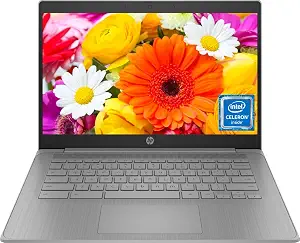
HP 14" HD Chromebook Laptop for Students
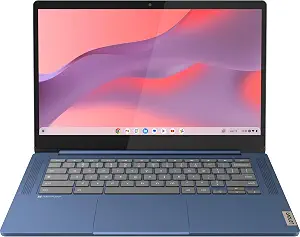
Lenovo Flagship Chromebook, 14'' FHD Touchscreen
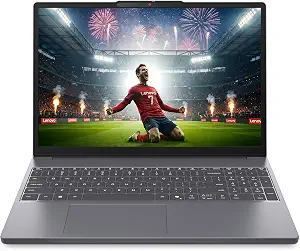
Lenovo IdeaPad Slim 3i
Best Laptop Students Buying Guide — Black Friday Deals 2026
A student laptop should match the work it needs to handle, not just catch the eye on a Black Friday page. These options range from two Chrome OS laptops to a Lenovo IdeaPad Slim 3i with a touchscreen, so the first useful step is to check course software requirements and the student’s file habits. The listed details can narrow the shortlist, but they cannot establish whether an unlisted app, accessory or configuration is included. Treat each Black Friday offer as a specific product variant to verify: confirm its model and stated specifications before deciding whether it fits the student’s routine.
HP 14" HD Chromebook Laptop for Students
The HP 14" HD Chromebook Laptop for Students is the Best Budget choice in this guide, based on its stated configuration rather than a claim about its price. It pairs an Intel Celeron N4120 processor with 4 Cores & Threads, 4GB RAM and 64GB eMMC. Those details give families a concrete starting point: compare the student’s required apps and typical active work with the configuration, rather than assuming that a student-labeled product will suit every course. Its operating system is Chrome OS, so check course and school requirements for that system before a Black Friday purchase.
The 14-inch display has a resolution of 1366 x 768 pixels. That gives shoppers specific screen information to consider alongside the student’s usual reading, writing and online study tasks. If the student expects to work with material that requires a different display setup, compare those needs with the stated resolution and look at the exact product listing. The facts here do not establish how a particular app or document will appear, nor do they describe other display characteristics, so use the course’s own requirements as the deciding reference.
Wireless is listed as 802.11ac. That is useful to place on a checklist when considering where the student connects, but it does not by itself confirm service quality in a particular room or compatibility with every network arrangement. For Black Friday, verify that the offered model still shows the processor, memory, storage, display and operating system described here. This laptop may suit a student whose required setup aligns with those details; a student with specific software, storage or screen demands should resolve those questions first. The Best Budget label is a guide to this product’s role in the article, not a measured verdict or a promise of a lower sale price.
Key specs
| Processor | Intel Celeron N4120 |
| Processor cores | 4 Cores & Threads |
| Memory | 4GB RAM |
| Storage | 64GB eMMC |
| Operating system | Chrome OS |
| Display | 14 inches |
| Resolution | 1366 x 768 pixels |
| Wireless | 802.11ac |
Lenovo Flagship Chromebook, 14'' FHD Touchscreen
Check Price on Amazon
The Lenovo Flagship Chromebook is the Best Overall pick among these three options, an editorial choice that reflects its combination of listed features rather than a test result or a market-wide award. It has a MediaTek Kompanio 520 processor, specified as Octa-Core, 4x A73 @2.0GHz + 4x A53 @2.0GHz, alongside 4GB RAM and 64GB eMMC. Its operating system is Google Chrome OS. Students should check their course requirements against that system and the stated memory and storage before treating the Black Friday listing as a match.
Its 14" Full HD Touchscreen brings two useful details into the decision: the listed Full HD resolution category and touch input. A student who wants to interact with study material by touch can consider that feature, while someone who primarily values a different screen size or configuration should compare priorities rather than assume touch is essential. The specifications do not establish whether a particular course app supports touch, so verify that directly where it matters. This is a practical reason to read the Black Friday product page carefully instead of relying on a headline description.
The listing states Wi-Fi 6, 11ax 2×2 + Bluetooth 5.1 combo, and a battery life of 13.5 hours. Treat the battery figure as the stated claim, not a guarantee of a particular student’s day: usage conditions are not provided here. Wireless and Bluetooth details can help shoppers check against their intended setup, but they do not confirm how a specific connection will behave. The Best Overall label marks this Chromebook as the balanced editorial option in this selection; it does not mean it will meet every course’s software, storage or connectivity requirements. Before buying on Black Friday, verify the exact model and offer details.
Key specs
| Display | 14" Full HD Touchscreen |
| Processor | MediaTek Kompanio 520 processor (Octa-Core, 4x A73 @2.0GHz + 4x A53 @2.0GHz). |
| Memory and storage | 4GB RAM + 64GB eMMC |
| Operating system | Google Chrome OS |
| Wireless | Wi-Fi 6, 11ax 2×2 + Bluetooth 5.1 combo |
| Battery life | 13.5 hours |
Lenovo IdeaPad Slim 3i
Check Price on Amazon
The Lenovo IdeaPad Slim 3i is the Best for a larger touchscreen workspace choice, grounded in its stated 15.3" WUXGA Touchscreen Display. That larger listed display size makes it the option to consider when a student puts screen workspace near the top of the checklist. It is not a claim that the laptop is easier to carry or more suitable for every desk; those details are not specified. Compare the actual study setting and course requirements before deciding whether the screen format makes sense.
This model lists an Intel Core™ Ultra 5 Processor 322, 16GB RAM and 1TB SSD Storage. Those are the provided configuration details to weigh against the student’s required software and file habits. They do not independently confirm compatibility or guarantee how a particular workload will run. If a course names specific system requirements, use those as the filter, then verify that the Black Friday listing is for this same configuration. The product facts also specify a 120Hz Refresh Rate, a screen detail shoppers can consider if it matters to their intended work.
Battery capacity is listed as 60 watt-hours. Capacity is not the same information as a stated runtime, so do not treat it as a promise of how long the student can work away from power. The listing facts here do not specify an operating system or wireless details; check the exact product page for information the student needs rather than filling those gaps with assumptions. This model’s Best for a larger touchscreen workspace label highlights the supported screen feature, not an overall superiority claim. During Black Friday, match the exact model and configuration to the student’s priorities before comparing offers.
Key specs
| Processor | Intel Core™ Ultra 5 Processor 322 |
| Display | 15.3" WUXGA Touchscreen Display |
| Memory | 16GB RAM |
| Storage | 1TB SSD Storage |
| Refresh rate | 120Hz Refresh Rate |
| Battery capacity | 60 watt-hours |
Let required software rule out a mismatch
Before browsing Black Friday offers, write down the operating system and configuration requirements for the student’s course software. This is especially important when comparing the two Chromebooks with the IdeaPad Slim 3i: the HP lists Chrome OS, and the Lenovo Flagship Chromebook lists Google Chrome OS, while the provided IdeaPad facts do not state its operating system. Do not infer compatibility from a product name or from a processor description. Check the school’s instructions or the software provider’s requirements, then confirm that the exact listing supplies the details you need.
A student may use a laptop for writing, research, lessons or course-specific tools, but those activities do not all imply identical technical needs. Ask which applications are required, whether the school specifies a system, and whether any minimum memory or storage is given. Use the product facts as a comparison checklist, not as a substitute for requirements. If a necessary detail is not shown in the supplied specifications, look it up on the exact product page or ask the relevant school contact before buying.
This approach makes a Black Friday decision less dependent on promotional wording. A sale headline cannot answer whether the system fits coursework, and the available facts do not establish every app’s behavior. First remove options that conflict with a stated requirement; then weigh preferences such as touchscreen interaction or display format among the remaining choices.
Make files and active work part of the shortlist
Memory and storage address different planning questions, so keep them separate when comparing student laptops. The HP lists 4GB RAM and 64GB eMMC; the Lenovo Flagship Chromebook also lists 4GB RAM + 64GB eMMC; and the IdeaPad Slim 3i lists 16GB RAM and 1TB SSD Storage. These are product facts, not guarantees about how many files a student can keep or how a particular application will behave. If course guidance gives capacity requirements, compare the exact figures with that guidance.
Think through the student’s ordinary file routine. Do they need to keep course materials on the device, or does their school specify another way to access work? The provided records do not describe cloud services, upgrade options or additional storage arrangements, so check those details rather than assuming them. Also consider how many applications or documents the student expects to use during a study session, then compare the stated memory with any requirements supplied by the school or software provider.
A Black Friday bundle or product title should not distract from the configuration itself. Confirm the offered model and its stated memory and storage, and check whether the page identifies any variant differences. If the required capacity remains unclear, pause to find authoritative requirements rather than treating one listed figure as universally sufficient. This turns a broad comparison into a decision about the student’s actual files and coursework.
Choose the display around the work and setting
Screen preference is personal, but the listed details give shoppers a useful way to narrow choices. The HP has a 14-inch display with 1366 x 768 pixels. The Lenovo Flagship Chromebook lists a 14" Full HD Touchscreen, while the IdeaPad Slim 3i has a 15.3" WUXGA Touchscreen Display. Compare the stated format with the student’s reading and study habits, and with the space where the laptop is normally used. These facts alone do not describe every aspect of picture quality or viewing comfort.
Touch input is explicitly listed for both Lenovo models in different display descriptions. Consider whether the student expects to use touch with the apps and materials involved; do not assume a course application supports it without checking. A larger listed display may be a priority for one student, while another may prefer a different balance of features. The product details do not state device weight or portability, so avoid using screen size alone to predict how convenient a laptop will be to carry.
On Black Friday, compare the screen specifications on the exact offer page, not just in a shortened title. Check the resolution wording and touchscreen description where relevant, and make sure the variant matches the one under consideration. If the student has specific accessibility or course-related display needs, consult those requirements directly. Choosing by actual study use helps keep an attractive feature from overshadowing a more important mismatch.
Read connection and power details with context
Connection and battery information can help shape a shortlist, but the claims need to be read narrowly. The HP lists 802.11ac wireless. The Lenovo Flagship Chromebook lists Wi-Fi 6, 11ax 2×2 + Bluetooth 5.1 combo. Those descriptions are useful when checking against a student’s planned network and accessories; they do not confirm performance in a particular location or guarantee compatibility with every device. Verify any essential connection requirement using the relevant school or equipment information.
Battery information also differs in form. The Lenovo Flagship Chromebook lists battery life of 13.5 hours, while the IdeaPad Slim 3i lists a battery capacity of 60 watt-hours. Capacity is not a runtime claim, and the provided facts do not explain the conditions behind the Chromebook’s battery-life figure. Treat each statement as written rather than converting one into the other. If long periods away from power matter, look for product-specific information that addresses the student’s expected use.
For Black Friday, check that the listing’s connection and power details belong to the precise model being offered. A product title may be brief, and an offer page may present a particular variant; confirm the details that matter before deciding. No single wireless label or battery figure can determine whether a laptop fits a student’s daily schedule, but these facts can reveal which questions to resolve.
Use the Black Friday listing as a final configuration check
Once the student’s requirements and preferences are clear, compare the exact offer rather than the promotional message. Verify the model name and the specifications that drove the shortlist: operating system where stated, processor, memory, storage and display. For a Black Friday purchase, make sure the product page describes the same configuration you intended to compare. The supplied facts do not establish a sale price, discount, stock status or included accessories, so do not assume any of those details from the product name or seasonal framing.
Check whether the offer identifies a variant clearly and whether its listed details match the student’s requirements. If the page leaves a necessary point unanswered, seek clarification before committing. Avoid substituting a similar-sounding model or an incomplete title for the configuration under consideration. This is particularly useful when the choice depends on a specific operating system, touchscreen, wireless description or storage figure.
Finally, compare the offer with the student’s priorities in order: required software first, then necessary capacity and screen preferences, followed by connection or battery details that matter to the study setting. Black Friday can be a convenient time to shop, but the offer is only relevant if the exact product fits. A careful configuration check is more useful than treating a headline deal as proof of suitability.
Make your Black Friday choice
The strongest shortlist begins with course requirements, then uses the listed facts to eliminate mismatches. The HP offers a Chrome OS configuration with a 14-inch display; the Lenovo Flagship Chromebook adds a Full HD touchscreen and stated battery-life figure; and the IdeaPad Slim 3i is the larger touchscreen choice with its listed memory and storage. These distinctions support the guide’s editorial labels, not a guarantee that one model suits every student. Before buying on Black Friday, confirm the exact variant and the requirements that matter. Choose the configuration that fits the student’s work, rather than the offer that merely sounds most appealing.