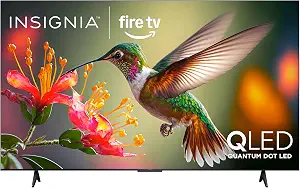
INSIGNIA 75-inch Class QF Series LED 4K UHD QLED Smart Fire TV with Alexa Voice Remote (NS75-UQFL26)
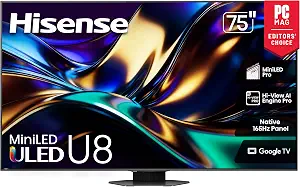
Hisense 75" U8 Series ULED Mini-LED 4K UHD Smart Google TV (75U8QG)
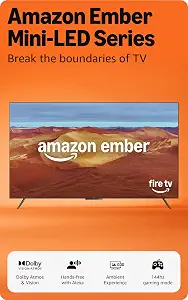
Amazon Ember 75" Mini-LED Series with Fire TV
Best 75 In Tv Buying Guide — Black Friday Deals 2026
A 75-inch TV can become the central screen in a living room, but the label alone does not tell you whether a particular model fits your viewing habits. The options here range from QLED with Fire TV to Mini-LED displays with different refresh, sound, and connectivity details. Start by deciding what matters most: a platform you want to use, a listed refresh specification for gaming, or specific picture features.
This guide treats each award label as an editorial way to organize these three choices, not as a claim of measured superiority. For Black Friday, check the exact model name and the details attached to the offer before deciding. A headline discount is useful only if the listing is for the configuration you actually want; prices and promotion terms can change, so compare the offer in front of you rather than assuming a deal.
INSIGNIA 75-inch Class QF Series LED 4K UHD QLED Smart Fire TV with Alexa Voice Remote (NS75-UQFL26)
Check Price on Amazon
Best Budget is the editorial label for the INSIGNIA 75-inch Class QF Series LED 4K UHD QLED Smart Fire TV with Alexa Voice Remote (NS75-UQFL26). It gives shoppers a clearly specified 75-inch screen with 4K resolution and QLED display technology, while its listed refresh rate is 60 hertz. That makes it a straightforward option to investigate if your shortlist begins with a large 4K screen and Fire TV rather than a higher refresh-rate specification. The label does not mean it is the least expensive listing; check the current price and exact model before treating it as a budget fit.
FireOS is the operating system, and the product name identifies an Alexa Voice Remote. If you are already considering a Fire TV environment, those are useful details to weigh against your own preferences. The specification record also lists four HDMI ports, so compare that count with the devices you intend to connect. It supports Dolby Vision, and built-in speakers have Dolby Atmos support. These details establish what is listed, not how the picture or sound will perform in your particular room. For Black Friday, verify that the offer names NS75-UQFL26 and retains the specifications you used to make your shortlist.
This Insignia is worth considering when you want to keep the decision focused on screen size, 4K, QLED, and a familiar platform choice. Its listed 60 hertz refresh rate is a detail to consider if gaming is important to you; decide whether that specification suits your own use rather than assuming it guarantees a particular experience. Compare it with the Hisense if you are looking for a higher listed refresh rate, or with the Amazon Ember if Mini-LED picture features are central to your priorities. Neither alternative is automatically the better match for every household. During Black Friday, assess the actual offer against your planned spending and the exact model, not the Best Budget label alone.
Key specs
| Display technology | Display Technology QLED |
| Resolution | Resolution 4K |
| Refresh rate | Refresh Rate 60 hertz |
| Screen size | Screen Size 75 inches |
| HDMI ports | Total Number of HDMI Ports 4 |
| Operating system | Operating System FireOS |
| HDR format | HDR Format Supported Dolby Vision |
| Audio | Built-in speakers with Dolby Atmos support |
Hisense 75" U8 Series ULED Mini-LED 4K UHD Smart Google TV (75U8QG)
Check Price on Amazon
Best Overall is the editorial label assigned here to the Hisense 75-inch U8 Series ULED Mini-LED 4K UHD Smart Google TV (75U8QG). Its provided specifications span several decision points: a 75-inch screen, 4K resolution, a listed refresh rate of 165 hertz, and variable refresh rate of 48Hz to 165Hz. Those figures may make it a compelling candidate for shoppers who want refresh-related details included in their comparison, especially if gaming is part of their routine. They do not establish how a particular game, source, or viewing setup will look, so keep expectations tied to the listing rather than the label.
The product information lists Google TV, three HDMI ports, Bluetooth 5.3, and Wifi 6E. Consider how those connections and the platform fit the devices and services you actually plan to use. Its audio specifications include 4.1.2 channels and Dolby Atmos encoding. Those are useful points to compare if sound is part of your shortlist, but they do not describe every aspect of the listening experience. The display is identified as ULED Mini-LED in the product name; the provided facts do not include further brightness or dimming specifications, so avoid filling in those gaps by assumption.
The Best Overall label reflects the combination of specified features in this guide, not a test result or a market-wide ranking. A shopper drawn to its refresh and variable-refresh specifications may still prefer another model if a different platform or a different listed feature matters more. Before a Black Friday purchase, confirm the offer is for 75U8QG, then compare the listing's exact configuration with your notes on resolution, refresh, ports, connectivity, and audio. If the offer headline makes a broad promise, let the product identity and its listed details—not the headline—decide whether it belongs on your shortlist.
Key specs
| Screen size | Screen Size 75 inches |
| Resolution | Resolution 4K |
| Refresh rate | Refresh Rate 165 hertz |
| Variable refresh rate | Variable Refresh Rate of 48Hz to 165Hz |
| Audio channels | Number of Audio Channels 4.1.2 |
| Audio encoding | Audio Encoding Dolby Atmos |
| HDMI ports | Total Number of HDMI Ports 3 |
| Wireless connectivity | Bluetooth 5.3, Wifi 6E |
Amazon Ember 75" Mini-LED Series with Fire TV
Check Price on Amazon
Best for Mini-LED picture and gaming features is the editorial label for the Amazon Ember 75-inch Mini-LED Series with Fire TV. The provided display details are specific: a 4K QLED mini-LED display, up to 1,400 nits of peak brightness, and 512 dimming zones. It lists Dolby Vision IQ and HDR10+ Adaptive as HDR formats. These specifications help shoppers identify the picture features they want to compare, but they are not a substitute for considering the room, viewing material, or your own priorities. The label describes the set of listed features that motivates this recommendation, not a claim that it outperforms other models.
Gaming specifications include 144Hz and AMD FreeSync Premium Pro certification. If those details are central to your decision, use them to compare the Ember with the refresh information on the other models; do not treat them as a promise about a specific game or setup. The listed audio is 2.1 Dolby Atmos. A microphone privacy feature is also specified: a switch electronically disconnects the microphones. That may be relevant if microphone control is on your checklist. The product name identifies Fire TV, but the facts provided here do not specify a port count or other connectivity details, so check the exact listing if those affect your setup.
This model is a useful candidate when Mini-LED and its stated picture and gaming features take priority. It may be less suitable for your shortlist if you need to confirm connection details that are not given here, or if another model better matches your platform preference. For Black Friday, confirm the offer is for the Amazon Ember 75-inch Mini-LED Series with Fire TV, and inspect the exact variant before comparing it with another listing. The specifications above give you concrete points to match; they do not establish a sale price, promotion, or stock status. Treat the Best for label as a starting point for your own decision.
Key specs
| Display | 4K QLED mini-LED display |
| HDR formats | Dolby Vision IQ, HDR10+ Adaptive |
| Peak brightness | up to 1,400 nits of peak brightness |
| Dimming zones | 512 dimming zones |
| Gaming | 144Hz that has been AMD FreeSync Premium Pro-certified |
| Audio | 2.1 Dolby Atmos audio |
| Microphone privacy | a switch that electronically disconnects the microphones |
Start with the job you want the screen to do
Before comparing product names, describe how the television will fit into your routine. If you mostly want a large 4K screen and a particular smart-TV environment, the Insignia’s QLED display, FireOS, and Alexa Voice Remote are specific details to weigh. If gaming makes refresh information especially important, the Hisense lists 165 hertz and variable refresh rate of 48Hz to 165Hz, while the Amazon Ember lists 144Hz and AMD FreeSync Premium Pro certification. Those facts give you distinctions to check; they cannot tell you which one will feel best with your own equipment or content.
Picture priorities can also narrow the field without turning specifications into guarantees. The Ember explicitly lists Mini-LED, peak brightness up to 1,400 nits, dimming zones, and two HDR formats. The Hisense name identifies ULED Mini-LED, while the Insignia specifies QLED and Dolby Vision support. Decide which of those listed features you want to pay attention to, then check whether the exact model has the other details your use requires. Black Friday can bring many competing headlines, but a personal checklist keeps the search focused on a real match instead of an attractive phrase.
Read display and refresh details as separate clues
All three choices are presented as 75-inch televisions, and the Insignia, Hisense, and Ember each have a listed 4K display or resolution. That shared information can help you establish a baseline, but it does not make the sets identical. The Insignia is QLED with a 60 hertz refresh rate. The Hisense is described as ULED Mini-LED and lists 165 hertz, plus a variable-refresh range. The Ember is a QLED mini-LED display with 144Hz listed for gaming and AMD FreeSync Premium Pro certification. Compare the relevant specification directly rather than assuming the names imply identical capabilities.
Think about the sources you watch and the games you play, then identify which listed features matter to those activities. The Ember names Dolby Vision IQ and HDR10+ Adaptive, while Dolby Vision support is listed for the Insignia. The provided facts for the Hisense in this guide do not identify HDR formats, so verify the full listing if HDR format is a deciding detail. During Black Friday, a model name can be easy to overlook among similar product titles. Match the exact series and model first, then use the display and refresh facts as a filter—not as a prediction of picture quality in every situation.
Make the platform and connections fit your household
A television’s operating environment matters most when it fits what you intend to use. The Insignia lists FireOS, and its product name includes an Alexa Voice Remote. The Hisense is identified as a Smart Google TV. The Amazon Ember product name identifies Fire TV. These are practical distinctions for someone who has a platform preference, but the provided information does not establish the full app selection or how any service will work for a particular household. If a specific service or control method is essential, confirm it on the exact product listing before you commit.
Connection details deserve their own check. The Insignia lists four HDMI ports, and the Hisense lists three. Count the devices you expect to connect and decide whether that information answers your needs. No HDMI-port count is supplied here for the Ember, so do not infer that it has more or fewer connections; inspect its listing if the count matters. The Hisense also specifies Bluetooth 5.3 and Wifi 6E. The other provided facts do not include equivalent wireless details, which is a reason to verify rather than guess. Black Friday comparison is more useful when you know which connection requirements are firm and which are optional.
Keep audio and privacy on their own checklist
Sound specifications can be worth comparing, but they should not be treated as a complete description of what you will hear. The Insignia lists built-in speakers with Dolby Atmos support. The Hisense specifies 4.1.2 audio channels and Dolby Atmos encoding. The Ember lists 2.1 Dolby Atmos audio. These are different kinds of information, so note each detail in the terms provided instead of turning them into an unsupported ranking. If your room, preferred listening level, or other audio equipment affects the choice, account for those needs separately; the listed facts do not settle them.
The Ember also specifies a switch that electronically disconnects its microphones. That is a distinct privacy detail, not an audio-quality claim. If microphone control is a deciding point for your household, include it in the comparison and confirm the model identity. No comparable microphone-switch fact is supplied for the other two products, so the absence of a detail here should not be read as proof that a feature is absent. Black Friday listings may emphasize headline picture specifications; take a moment to check sound and privacy details independently if they influence your purchase.
Use Black Friday listings to confirm the exact fit
Treat a Black Friday offer as a specific listing to verify, not as proof that every similarly named television has the same configuration. Match the exact product name and model identifier wherever one is provided: NS75-UQFL26 for the Insignia and 75U8QG for the Hisense. For the Ember, match the full Amazon Ember 75-inch Mini-LED Series with Fire TV name. Then cross-check the features that put the television on your shortlist, such as resolution, display type, refresh information, HDMI-port count, or microphone privacy.
Next, compare the offer itself with your own priorities. The information here supplies no prices, discounts, stock status, or promotion terms, so those details must come from the live listing you are considering. Do not assume a headline applies to a different variant, and do not let a temporary-looking message replace a model check. If an important item is not specified in this guide—such as a connection detail for the Ember—look for confirmation on the exact listing. A disciplined Black Friday comparison helps distinguish a relevant offer from one that simply uses similar wording.
Make your Black Friday choice
The right 75-inch choice depends on which verified details solve your particular shopping problem. The Insignia brings QLED, FireOS, four HDMI ports, and a 60 hertz refresh specification into the comparison. The Hisense lists Google TV, Mini-LED in its series name, 165 hertz, and variable refresh rate. The Ember specifies Mini-LED picture details, gaming features, Dolby Atmos audio, and microphone disconnection. Those differences give you clear questions to answer before buying.
For Black Friday, shortlist by priorities, verify the exact model or series, and compare the live offer without assuming a discount or configuration. The editorial labels can help you navigate this guide, but your room, devices, viewing habits, and feature requirements should make the final call.