 Check Price on Amazon
ASUS TUF Gaming GeForce RTX 5090 32GB GDDR7 OC Edition Gaming Graphics Card Buying Guide — Black Friday Deals 2026
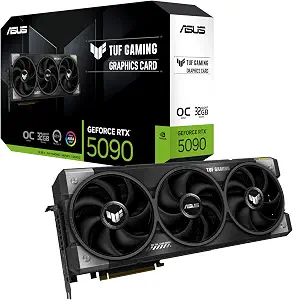
An RTX 5090 purchase deserves a closer look than a model name alone can provide. For Black Friday, this guide focuses on the listed ASUS TUF Gaming GeForce RTX 5090 32GB GDDR7 OC Edition and the details that can help you decide whether its configuration fits your plans. Its published specifications identify graphics memory, native video outputs, two clock-mode entries, card dimensions and axial-tech fans. They do not establish how the card will perform in a particular system or what a Black Friday offer should cost, so keep those questions separate from the facts that can be checked.
Start by connecting your own priorities to the stated features: the memory figure to the work you expect to do, the output list to your display plan, and the dimensions to the room available in your build. Then inspect the exact Black Friday listing and variant before comparing offers. That approach keeps the decision grounded in verifiable details rather than assumptions attached to the RTX 5090 name.
The ASUS TUF Gaming GeForce RTX 5090 32GB GDDR7 OC Edition is a single-card option for shoppers whose shortlist is already focused on an RTX 5090. Its specified 32 GB of GDDR7 graphics memory gives you a concrete capacity to compare with the requirements of the applications and games you intend to use. Capacity alone cannot promise a particular result, but it can help you assess whether this configuration belongs in your research. For Black Friday, confirm that the listing identifies this exact edition rather than relying on a broad RTX 5090 label.
This card is a useful fit to consider if your priorities include its stated memory capacity and its set of native display connections. It lists Native DisplayPort 2.1a x3 and Native HDMI 2.1b x2. Those connection types and counts can be compared with the inputs on the displays you plan to connect; they do not, by themselves, establish how a particular display setup will behave. The listed default boost clock is 2550 MHz, while OC mode is listed at 2580 MHz. Treat those as configuration details, not a guarantee of results in your system.
A practical reason to shortlist this model is its clearly specified combination of capacity and connections, not an assumption that it will suit every build. The card dimensions are 13.7"L x 5.7"W, and axial-tech fans are listed as a cooling feature. Check the dimensions against your available space and consult the listing for any additional fit details you need. For Black Friday shoppers, the editorial fit is Best for shoppers prioritizing stated graphics-memory capacity: the label reflects the 32 GB specification, not a claim of measured superiority.
Decide whether the stated memory fits your plans
The card’s 32 GB of GDDR7 is a useful comparison point, but it is not a complete description of what your workload requires. Before Black Friday, write down the applications, games or other tasks you expect the card to serve, then consult the requirements and guidance relevant to those specific uses. Compare that information with the stated capacity rather than treating a large number as an automatic reason to buy. Graphics memory is only one part of a configuration, and the available facts here do not establish application-specific performance.
This approach can also prevent a listing from answering a different question than the one you have. If memory capacity is central to your decision, confirm that the offer names the ASUS TUF Gaming GeForce RTX 5090 32GB GDDR7 OC Edition and retains that specification. If another consideration matters more, such as the outputs or physical dimensions, give it equal attention. A Black Friday deal is worth comparing only after you know which details are relevant to your own use.
Map the native outputs to the displays you plan to use
The native output list is specific: Native DisplayPort 2.1a x3 and Native HDMI 2.1b x2. Make a connection plan by checking the ports on the displays you intend to use and deciding which output type you would connect to each one. This is a practical compatibility check between listed connection types and your display inputs, not a promise about every possible setup. The supplied details do not specify display limits or other system requirements, so look those up separately if they affect your decision.
During Black Friday shopping, compare the output list on the product page with the exact card variant in your cart. Do not assume that a general RTX 5090 description settles the connection question for a particular listing. A simple written plan can help: identify each display, note its available input, and match that against the native outputs stated for this card. If you cannot confirm a needed detail from the listing, treat it as an open question rather than filling in the gap with an assumption.
Keep the clock entries in their stated context
The listed default mode is 2550 MHz (Boost clock), and the listed OC mode is 2580 MHz. These entries distinguish two stated configurations; they do not show what results a particular user should expect or establish a performance difference in any given task. If the OC-mode figure matters to your shortlist, verify that the Black Friday offer is for the OC Edition named here and review the product listing for how the modes are described. Avoid comparing clock figures as though they alone settle the choice between cards.
For many shoppers, the more useful question is whether the listed modes match the configuration they intend to select and understand. Keep the default and OC entries separate in your notes, and avoid turning either into a promise about operation in your own setup. The clock details can help identify what this model lists, while your remaining system and workload questions need their own verification. This careful reading is especially helpful when deal pages shorten names or display a generic family label.
Black Friday fit checks start with the published dimensions
The stated card dimensions are 13.7"L x 5.7"W. Compare that exact notation with the space available in your build and with the measurements or guidance for your case. The figure gives you a starting point for a physical-fit check; it does not answer every clearance question. If your decision depends on additional measurements or installation details, seek those from the product listing or the relevant equipment documentation before ordering.
On Black Friday, add this check to your comparison before focusing on an offer. Confirm the product title and variant, then make sure the stated dimensions correspond to the card you mean to buy. A tempting listing is not a substitute for knowing whether the card’s stated footprint suits your available space. Keep any unanswered fit questions visible on your checklist and resolve them rather than assuming that a familiar product family guarantees the same physical details.
Treat axial-tech fans as one factor, not a verdict
Axial-tech fans are the cooling feature identified in the supplied specifications. That is useful information to include when comparing this card with your priorities, but the feature name alone does not establish noise, temperatures or cooling results. If those qualities are important to you, look for relevant details in the exact listing and supporting product information rather than inferring them from the fan description. The available specification lets you record the feature; it does not resolve every cooling question.
This distinction matters when a Black Friday page emphasizes a short feature list. Give the fan detail appropriate weight alongside memory, connections, clock entries and dimensions, then decide which points are essential for your use. Avoid letting one named feature stand in for a broader assessment that the listed facts do not support. A disciplined comparison makes it easier to recognize what you know about this ASUS card and what still needs confirmation before you commit.
Key specs
| Graphics memory | 32 GB |
| Memory type | GDDR7 |
| Video outputs | Native DisplayPort 2.1a x3, Native HDMI 2.1b x2 |
| Default boost clock | Default mode: 2550 MHz(Boost clock) |
| OC mode clock | OC mode: 2580 MHz |
| Card dimensions | 13.7"L x 5.7"W |
| Cooling features | Axial-tech fans |
Make your Black Friday choice
For this RTX 5090, the most dependable Black Friday comparison is a precise one: confirm the ASUS TUF Gaming GeForce RTX 5090 32GB GDDR7 OC Edition, check its stated capacity and native outputs against your priorities, read the clock modes as listed, and verify the dimensions for your available space. The supplied facts do not establish a sale price, savings or system-specific outcome, so judge the exact offer on information you can confirm. If the configuration answers your requirements and your remaining fit questions are resolved, you can compare the offer with confidence in what the specifications do—and do not—tell you.