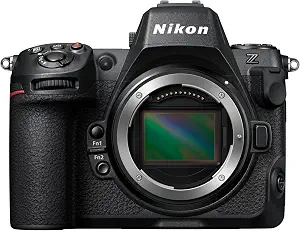
Nikon Z 8 Buying Guide — Black Friday Deals 2026
Which parts of the Nikon Z 8 would change your actual shooting decisions: detailed still images, subject tracking, fast sequences, or internal high-resolution video? Start there before comparing a Black Friday offer. The listed facts describe a camera with a 45.7MP stacked CMOS sensor, EXPEED 7 processing, several still-image formats, multiple continuous-shooting options, and internal video modes that include 8K/60p and 4K/120p. Those capabilities can serve different plans, but they do not make every configuration or workflow equally suitable for every shopper.
Use this guide to connect those specifications to the work you expect to do. A Black Friday price is only useful in context: compare the exact Nikon Z 8 listing and variant you intend to buy, and check what the offer actually includes rather than assuming that a headline or product image answers every question.
The Nikon Z 8 is worth considering if your priorities span high-resolution stills and capable internal video, or if you want to choose among several capture and file options. Its 45.7MP stacked CMOS sensor and EXPEED 7 processing engine form the core of the listed specification. For stills, the available choices include RAW 14-bit, High Efficiency RAW, 10-bit HEIF, and JPEG 8-bit. For motion, the camera records internal 8K/60p and 4K/120p video, with internal 12-bit N-RAW and ProRes RAW recording also listed. Think through which of those options you would actually use before placing a Black Friday order.
The focus and sequence specifications add further decisions. Autofocus detects focus as low as -9 EV and combines subject detection with 3D tracking. Continuous shooting options are 20, 30, 60, and 120 fps. These details may matter when your subjects, available light, or desired sequence make them relevant; they are not a substitute for deciding what you photograph and how you finish the results. For a Black Friday comparison, treat the Z 8 as a set of choices to match to your own work, not as a reason to buy every capability without a plan.
Where 45.7MP and EXPEED 7 fit into a stills workflow
The sensor and processor are useful starting points for shoppers who make still photographs a central part of their decision. The Nikon Z 8 lists a 45.7MP stacked CMOS sensor and EXPEED 7 processing engine. Rather than treating those specifications as a promise about a particular result, ask what you need from your images: do you prioritize the listed resolution, and do the available file choices suit the way you plan to handle photographs afterward? That question helps keep a Black Friday comparison tied to your needs instead of an impressive specification in isolation.
The still-image options cover RAW 14-bit, High Efficiency RAW, 10-bit HEIF, and JPEG 8-bit. Consider which format you expect to select most often and whether you want choices for different kinds of image use. If you do not have a reason to use the less familiar options, decide whether the formats you already understand are sufficient for your plans. The provided specifications do not establish which format is best for a particular subject or editing routine, so make the call around your intended finish.
Low-light focus and subject tracking: match the subject
The autofocus specification combines subject detection and 3D tracking, and says focus can be detected as low as -9 EV. Those are specific capabilities to weigh if your shooting includes subjects that move or situations where focusing conditions are a concern. Before a Black Friday purchase, translate the specification into a practical question: would subject detection and tracking be useful for the subjects you regularly photograph, or is another part of the camera more important to you?
Avoid reading the low-light figure as a guarantee for every scene. The listing provides that focus-detection limit, but not a description of every subject, lens, or shooting condition. If focus behavior is a deciding factor, look for the exact product listing and variant you intend to purchase, then evaluate the stated feature against your own priorities. This keeps your decision grounded in the supplied information without expecting one specification to settle every real-world shooting question.
Black Friday video planning starts with the finished deliverable
Internal 8K/60p and 4K/120p video give the Nikon Z 8 two clearly stated recording modes to consider. Work backward from what you plan to make: which of those modes, if either, answers a real project requirement? A Black Friday deal should not push you toward a video capability simply because it appears prominent. If you mainly need still photography, decide whether these options add meaningful value to your plan; if video is central, identify the mode you expect to use.
The listed modes do not tell you everything about your intended production setup or finished project, so avoid assuming details beyond the stated formats. Compare the exact listing and variant, and make sure the offer is for the product you have selected. Then weigh the internal video options alongside stills, focus, and shooting-rate needs. This gives you a more useful decision than treating a single video specification as the whole camera.
RAW and compressed choices for the images you intend to finish
Video and still-image formats are separate parts of the Nikon Z 8 decision. For video, internal 12-bit N-RAW and ProRes RAW recording are listed. For stills, the choices include RAW 14-bit, High Efficiency RAW, 10-bit HEIF, and JPEG 8-bit. If RAW capture is important to you, decide whether you mean stills, video, or both, and consider how each choice fits the work you intend to do after capture.
Black Friday comparison is more useful when it begins with that distinction. Do not assume that selecting a RAW option automatically suits every project, or that every listed format belongs in your usual workflow. The facts identify the available formats, not the editing tools, storage needs, or final outputs that will suit you. Make your decision around the formats you recognize and expect to use, and verify that the exact product listing is the Nikon Z 8 you mean to compare.
Black Friday burst-rate decisions for changing action
The continuous-shooting options are 20, 30, 60, and 120 fps. That range makes it especially important to choose with a purpose: consider what kind of moment you photograph and which listed option you would use for it. A shopper who rarely needs a rapid sequence may place more weight on still-image formats or video modes, while someone who expects to use continuous shooting can give those options closer attention. These are planning questions, not claims about which rate is best for a particular subject.
When comparing a Black Friday offer, do not treat the largest stated rate as an automatic reason to choose the camera. The listing gives the options, but does not specify how you should use each one for your particular work. Decide whether continuous shooting is a central requirement, then compare the exact listing with your other priorities. If no listed rate addresses a real need, let that feature carry less weight in your purchase decision.
Key specs
| Sensor and processor | 45.7MP stacked CMOS sensor and EXPEED 7 processing engine. |
| Autofocus | detects focus as low as -9 EV, combines subject detection and 3D tracking. |
| Video | Internal 8K/60p and 4K/120p video. |
| RAW video | Internal 12-bit N-RAW and ProRes RAW recording. |
| Still image formats | RAW 14-bit, High Efficiency RAW, 10-bit HEIF and JPEG 8-bit. |
| Continuous shooting | 20, 30, 60 and 120 fps shooting options. |
Make your Black Friday choice
Before checkout, confirm that the exact listing is for the Nikon Z 8 and the variant you intend to compare; read the offer details rather than inferring included items from the camera name; and match your priorities to the stated sensor, autofocus, video, RAW, still-image, and continuous-shooting options. Black Friday is a useful time to compare an offer against that checklist, not a reason to overlook a mismatch. Choose the Z 8 when its listed capabilities fit the work you plan to do, and when the specific offer you are considering matches your requirements.