Viproud Thermometer for Adults and Kids
Oklar Blood Pressure Monitor Upper Arm BP Machine
Fingertip Pulse Oximeter
Best Home Health Care Buying Guide — Black Friday Deals 2026
Home health care equipment is most useful when it matches a specific routine: checking temperature without contact, taking an upper-arm blood pressure reading, or viewing oxygen saturation and pulse information at a fingertip. These devices answer different questions, so a convenient display or a long memory list cannot make one a substitute for another. Start with the check you intend to make, then consider who will use the device, how it is powered, and whether its fit and stored readings suit the household. During Black Friday, treat the event label as a prompt to compare listings, not proof of a discount. Confirm the exact product and variant before deciding.
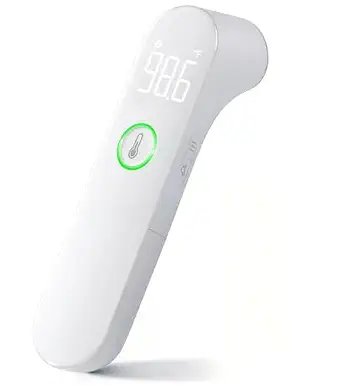
Viproud Thermometer for Adults and Kids
For a household that wants temperature checks without placing a thermometer against the person, this model uses a non-contact measurement method and lists a response time of 1 seconds. Its stated temperature range runs from 89.6 °F to an upper value of 109.2 °F. Check that range against the kind of readings you expect to take rather than assuming every thermometer covers the same span. The Best Overall label is an editorial choice among the products in this guide: the combination of non-contact measurement, selectable units, and saved readings makes it a broadly considered option, not a claim of tested superiority.
The display setup can be considered alongside the routine. Temperature units are switchable between ℉ and ℃, and the device stores 35 sets of memory. That may be useful when a caregiver wants to look back at readings recorded on the device; it does not determine what those readings mean or replace a separate record if one is needed. The thermometer also has a 30 seconds auto shut-off function. Two AAA batteries are required and included, so a buyer can account for the supplied power source while still planning for eventual replacement. These details are worth checking on a Black Friday listing to ensure the selected item matches the stated configuration.
This format may suit someone who prefers a quick, non-contact check, while it may be a mismatch if the intended task calls for a different measurement method or a range outside the stated limits. Before buying, think about who will hold and operate it, whether switchable temperature units matter in your household, and whether its memory capacity fits your record-keeping habits. The one-second response specification describes the listed response time; it should not be read as a promise about overall care decisions. During Black Friday, compare the exact product listing and included batteries rather than inferring a lower price or better value from the seasonal wording alone.
Key specs
| Measurement method | Non-Contact |
| Response time | 1 seconds |
| Temperature range | 89.6 °F |
| Upper temperature range | 109.2 °F |
| Batteries | 2 AAA batteries required. (included) |
| Memory | 35 sets of memory storage |
| Temperature units | ℉/℃ switchable |
| Auto shut-off | 30 seconds auto shut-off function |
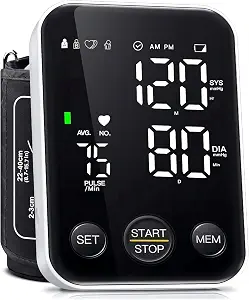
Oklar Blood Pressure Monitor Upper Arm BP Machine
Check Price on Amazon
An upper-arm blood pressure monitor is the relevant choice when the planned home check is blood pressure, rather than temperature or fingertip oxygen saturation. This model has one-button operation and a backlit LED screen with clear digits. It is listed as providing readings within 1 minute. Its cuff range is 8.7 – 15.7 inches (22-40 cm), so checking the intended user’s arm measurement against that range is a practical step before checkout. Its Best for shared blood pressure tracking label reflects the stated support for two users and saved readings; it is an editorial match to those features, not a measured ranking.
The monitor supports two users, storing 120 readings per user. That can help keep readings associated with separate user profiles on the device, though households should still decide how they want to maintain any records they rely on. The power options are 3AA batteries or a Type-C interface. The product is not rechargeable, so do not mistake the interface option for a rechargeable battery. This is a useful distinction to verify when comparing Black Friday offers: look for the exact model and its power description, and consider which option is practical where the monitor will be used.
Its one-button control may appeal to a person who wants a straightforward operation, while the backlit screen is a relevant listed feature for viewing the displayed digits. The cuff range is a more decisive fit check than the offer headline; if the intended user’s arm measurement falls outside it, this configuration may not be the right match. Also consider whether two-user storage is useful for your household or simply an extra feature you would not use. Black Friday can make product names and variants easy to skim past, so confirm the cuff range, power details, and memory configuration on the specific listing before making a purchase.
Key specs
| Operation | one-button operation |
| Display | backlit LED screen with clear digits |
| Reading time | get readings within 1 minute |
| Memory | Supports two users, storing 120 readings per user |
| Power | 3AA batteries or a Type-C interface |
| Rechargeability | This product is not rechargeable |
| Cuff range | 8.7 – 15.7 inches (22-40 cm) |
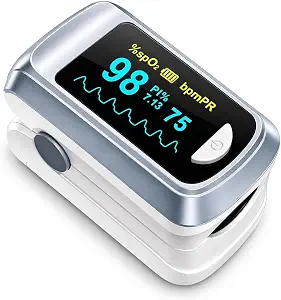
Fingertip Pulse Oximeter
For a fingertip check, this pulse oximeter has a bright screen that shows SpO2, pulse rate, and signal strength. A waveform bar graph provides visual confirmation of pulse strength, and operation is by one button. The Best Budget label is an editorial choice for shoppers considering a focused, one-button device with the listed display information; it does not claim that this is the lowest-priced option or that a Black Friday price is a bargain. Compare the actual offer and exact item rather than using the label as a substitute for checking the listing.
The unit measures 2.25 x 1.2 x 1.25 inches and weighs 2.4 ounces. Two AAA batteries are required and included, and auto power-off preserves battery life. A lanyard for easy carrying is also included. Those are practical details for deciding whether the listed size, weight, and accessory suit the way you expect to keep or carry the device. The display names the information it presents, but these specifications do not establish how to interpret a particular reading or whether a reading indicates a health condition. A pulse oximeter is a different tool from either of the other devices in this guide.
Choose this format only if fingertip oxygen saturation and pulse information are the checks you want to make. If you need a temperature reading or an upper-arm blood pressure reading, its listed display does not address that task. Before a Black Friday purchase, verify that the selected listing describes this device and includes the stated accessories and batteries; do not assume another listing with a similar name has the same contents. The small listed dimensions and one-button operation may be priorities for some buyers, while the decisive question remains whether the displayed measurements fit the home-care task you have in mind.
Key specs
| Display | Bright screen clearly shows SpO2, pulse rate, and signal strength |
| Pulse indicator | The waveform bar graph provides visual confirmation of pulse strength |
| Operation | One-button operation |
| Power saving | Auto power-off preserves battery life. |
| Dimensions | 2.25 x 1.2 x 1.25 inches |
| Weight | 2.4 ounces |
| Batteries | 2 AAA batteries required. (included) |
| Included accessories | 1x Lanyard for easy carrying |
Choose the device by the decision in front of you
A useful shortlist begins with the kind of information you intend to collect. The non-contact thermometer is for temperature checks, the upper-arm monitor is for blood pressure, and the fingertip device displays SpO2, pulse rate, and signal strength. Their overlapping role is home monitoring, not interchangeability. Buying a device because it appears versatile in a Black Friday listing can lead to a mismatch if it does not provide the reading you actually need.
Write down the intended task before comparing convenience features. If you are choosing for another person, consider whether that person will use the device independently or need help, and whether the listed control style makes sense for the routine. One-button operation appears on both the blood pressure monitor and pulse oximeter, but the readings and physical formats differ. Black Friday may bring several product pages into view at once; compare each item against the task rather than choosing the one with the broadest-sounding name.
A workable interface matters more than a crowded feature list
Think about what the user will need to see and do during an ordinary check. The blood pressure monitor lists a backlit LED screen with clear digits, while the pulse oximeter’s bright screen presents several kinds of information and a waveform bar graph. The thermometer lets the user switch between ℉ and ℃. These are specific interface differences, not a basis for claiming that one display is easier for everyone. Consider the user’s preferences and the place where readings are normally taken.
The control style also affects whether a device feels manageable. One-button operation is listed for the blood pressure monitor and pulse oximeter; the thermometer’s supplied facts instead highlight its units, memory, and auto shut-off. During Black Friday, avoid treating a feature-rich page as automatically better. Ask whether the listed controls and display address a real household preference. If the person using the device would rather have assistance, a simple interface may still be only one part of a suitable routine.
Decide what saved readings are meant to help you remember
Memory can help with looking back, but it is not the same as a complete care record or an interpretation of readings. The thermometer stores 35 sets of memory, while the blood pressure monitor supports two users with 120 readings per user. Those descriptions make the blood pressure model the more explicitly shared-record option in this selection, but choose based on how your household will use stored information rather than the largest stated capacity.
The pulse oximeter’s supplied details focus on its live display and do not list memory storage, so do not assume it saves readings. During Black Friday, verify memory information on the exact product page instead of relying on a general product title or a similar model. Consider who will review readings, how separate users will keep information straight, and whether a separate written or digital record is part of the routine. Use home readings as information, not as a diagnosis; a stored number cannot answer every health question.
Check fit and power before the offer catches your eye
Physical fit can rule out a seemingly convenient choice. The upper-arm monitor lists a cuff range of 8.7 – 15.7 inches (22-40 cm), so compare that exact range with the intended user’s arm measurement before buying. The pulse oximeter’s listed dimensions and weight may matter if carrying or storage is a priority. For the non-contact thermometer, the relevant fit question is whether its stated temperature range and measurement method suit the planned use. Each check is different; avoid inferring unlisted fit details.
Power deserves the same attention. The thermometer and pulse oximeter each require 2 AAA batteries, which are included. The blood pressure monitor can use 3AA batteries or a Type-C interface and is explicitly not rechargeable. Decide which arrangement fits the intended location and how you will handle replacement batteries if needed. Black Friday offer comparisons are more useful after these requirements are clear: a headline cannot compensate for a cuff mismatch or a power setup that does not suit your routine.
Read the Black Friday listing as a configuration, not a promise
Seasonal language alone does not establish that an item is discounted. Compare the exact product name, selected variant, stated features, and included items in the listing you are considering. For the thermometer and pulse oximeter, the supplied facts specify included AAA batteries; the pulse oximeter also lists a lanyard. For the blood pressure monitor, confirm the cuff range and whether the listed power options match your plans. Do not assume a similarly named item or alternate configuration has identical contents.
A sensible Black Friday comparison puts the product fit first, then checks the offer attached to that particular listing. If the exact configuration is unclear, pause rather than treating a seasonal badge as evidence of value. Avoid deciding from an assumed discount, stock status, or seller promise that has not been verified on the listing. The point is not to rush into a purchase because of the calendar; it is to compare the item you need with the item actually being offered and decide whether the match is right for your home.
Make your Black Friday choice
The most useful home health care purchase is the one that answers the intended question and fits the person, power setup, and record-keeping routine. Choose between temperature, blood pressure, and fingertip readings first; then check the listed range, interface, memory, and included items that matter to that choice. During Black Friday, verify the exact offer and variant without assuming a promotion or savings. These devices provide information for a home routine, not a diagnosis. A careful match is more valuable than choosing by a seasonal headline or by features unrelated to the check you plan to make.